

Hard water stains on Front Range fixtures: a removal guide

Denver Water is considered moderately hard, and many suburban systems and private wells along the Front Range are harder still. Add bright sun and dry air that evaporates water quickly, and you get cloudy shower glass, crusty faucet aerators and white rings around drains. The good news is that most of it comes off with the right chemistry and a little patience. The bad news is that some of it is permanent, and it helps to know the difference before you start scrubbing.
What hard water scale actually is
When water evaporates it leaves behind dissolved minerals, mainly calcium carbonate and magnesium. A thin layer is easy to remove. Over months, layers build into a hard, chalky crust that bonds to glass, chrome and tile. Soap scum makes it worse, because soap reacts with those minerals to form a sticky film that traps more scale.
Match the product to the surface
Scale dissolves in acid, but not every surface tolerates acid. Using the wrong product is the most common way homeowners damage bathrooms while trying to clean them.
- Glass shower doors: a mild acid such as diluted white vinegar or a commercial descaler, applied and left to dwell for 5 to 10 minutes, then scrubbed with a non-scratch pad.
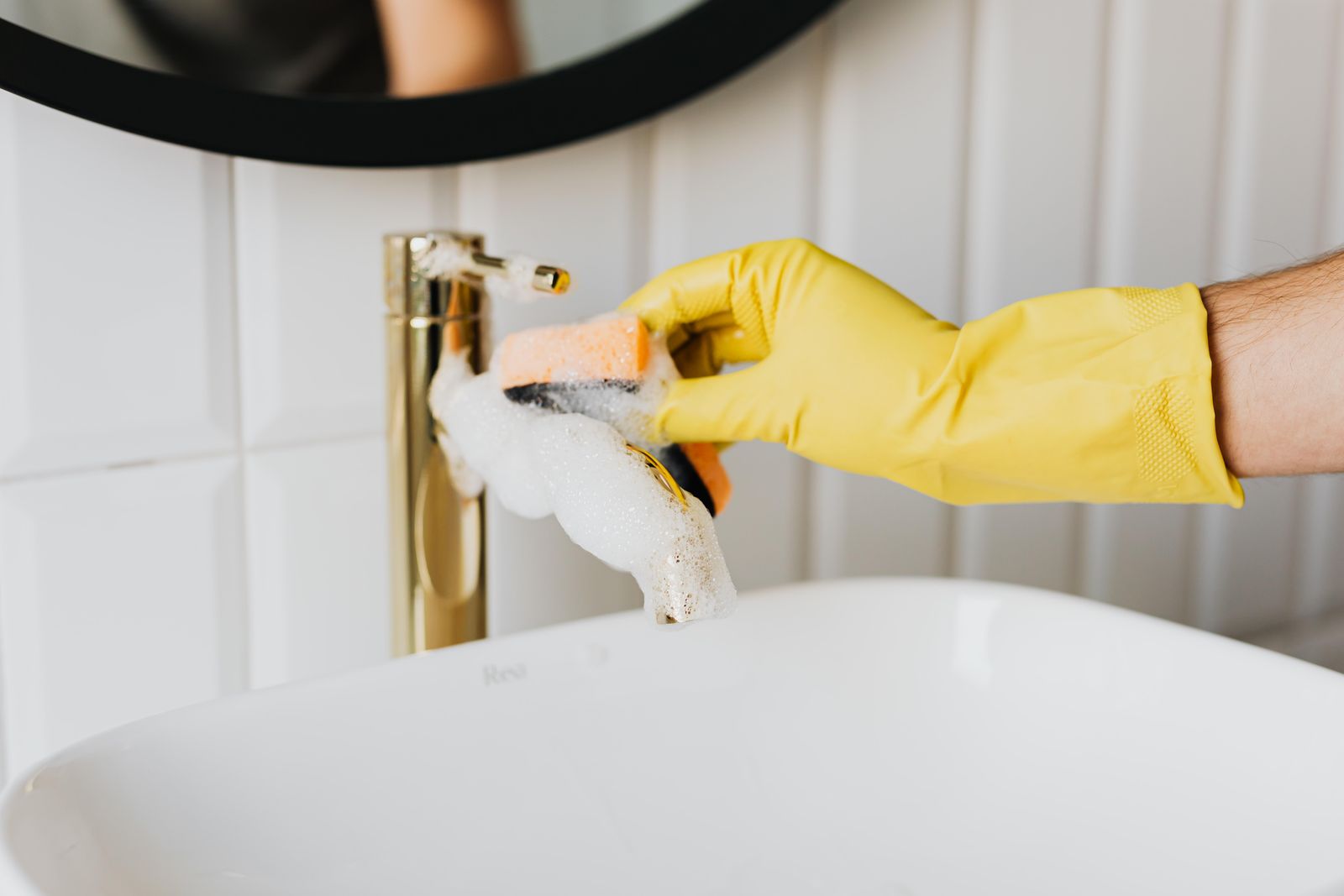
- Chrome and stainless fixtures: the same mild acids, rinsed thoroughly and dried to avoid spotting. Soak aerators in vinegar for an hour.
- Porcelain and ceramic tile: acid descalers are generally safe. Rinse grout well afterward.
- Natural stone such as marble, travertine and limestone: never use vinegar or acid. It etches the stone. Use a stone-safe, pH-neutral cleaner and a poultice for stubborn deposits.
- Brass, bronze and specialty finishes: check the manufacturer's care guide. Many living finishes and coated fixtures are damaged by acid.
A step-by-step method for glass
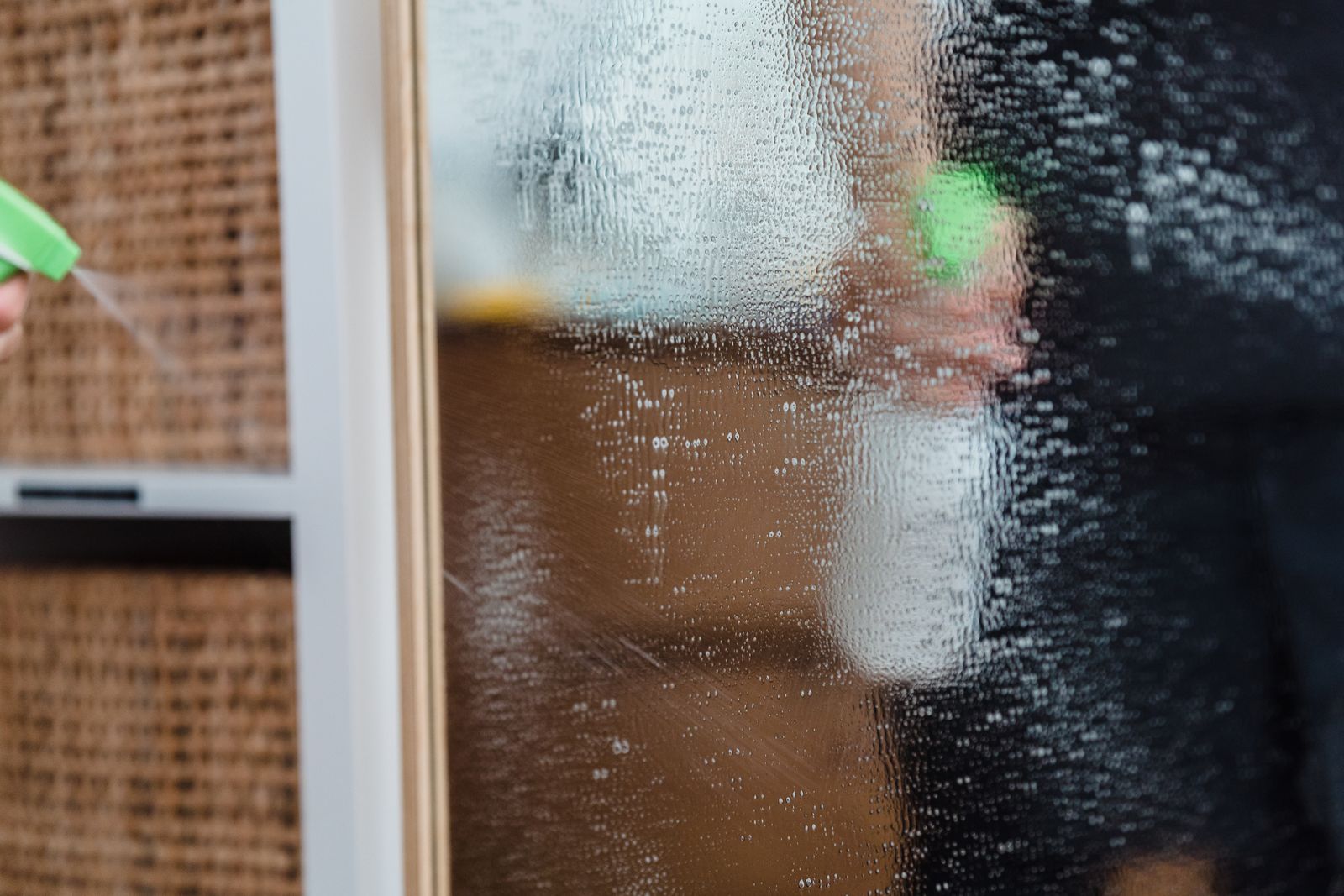
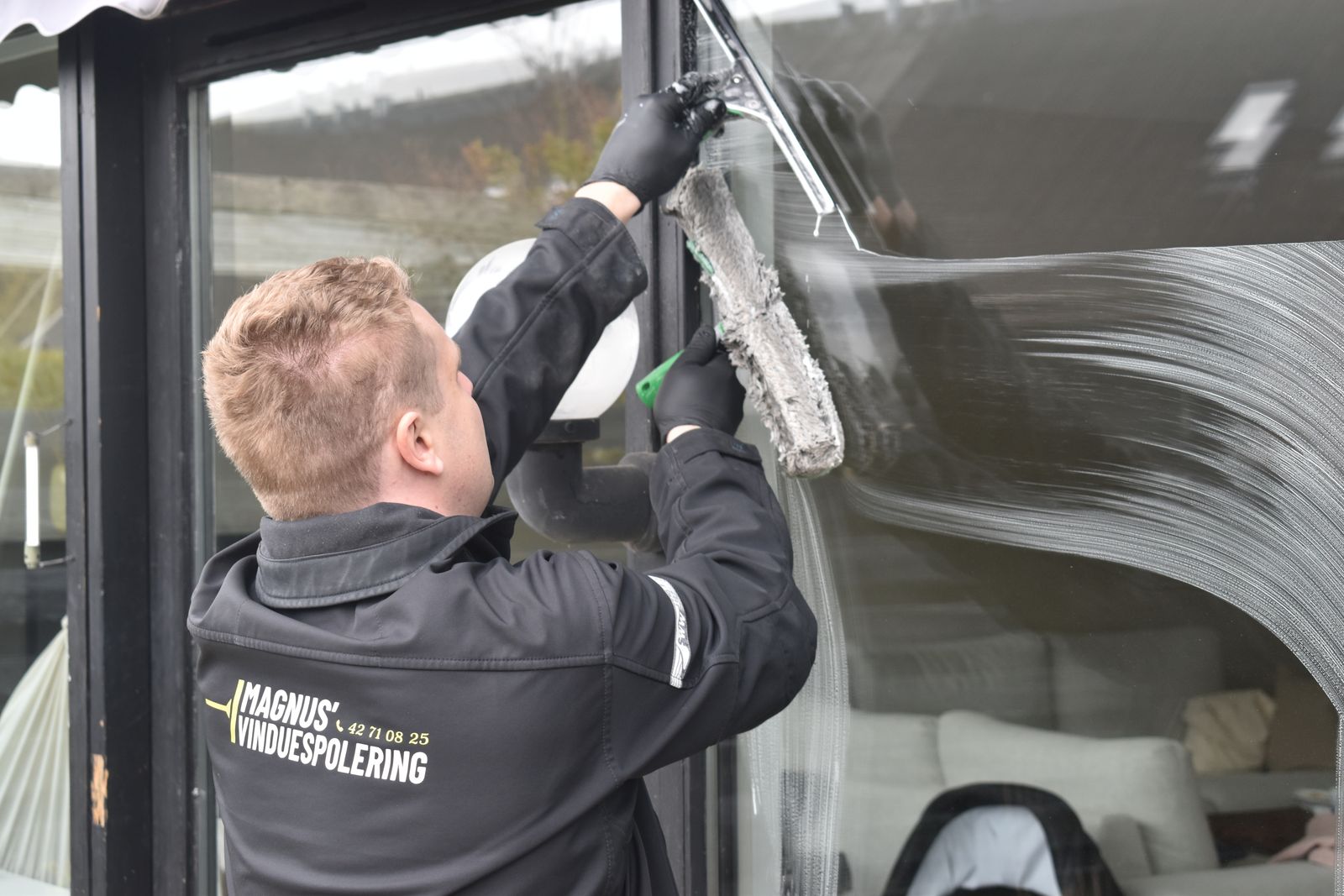
Start by removing soap scum with a degreasing dish soap solution, since scale remover cannot reach minerals under a soap film. Rinse. Apply a descaler generously, cover it with plastic wrap on vertical surfaces to keep it wet, and let it dwell. Scrub in overlapping circles with a white non-scratch pad, rinse with warm water and squeegee dry. Repeat on heavy deposits. Two or three rounds are normal for glass that has not been descaled in a year.
Keep the product wet. Most scale remover fails because it dries on the glass before it has time to work.
When it is etching, not staining
If the glass still looks cloudy after it is completely dry, and you can feel a rough texture with a fingernail, the minerals have etched the surface of the glass. Cleaning cannot reverse etching. Glass polishing compounds can improve light etching, but heavy etching usually means the panel needs replacing. On our deep cleans we tell clients before we start when glass looks etched, so expectations are clear.
Keeping it from coming back
- Squeegee shower glass after every use. It takes 20 seconds and prevents most buildup.
- Apply a hydrophobic glass protectant every few months so water beads and rolls off.
- Adjust sprinklers so they do not spray exterior windows and doors.
- Consider a water softener if you are on a well or in an area with very hard water.
- Schedule descaling as part of a quarterly deep clean.
Our crews carry hard water chemistry and stone-safe alternatives on every truck. If your bathrooms need a reset, a deep clean includes descaling glass, tile and fixtures, with honest advice about anything that cannot be fully restored.
Want this handled for you? Crisp & Co. crews clean homes across the Denver metro from a written checklist, with a 24-hour re-clean promise.